Jafar al-Sadiq
Descendant of the Prophet, respected in several Islamic traditions.
From the Deenlume library, adapted from Wikipedia
Awaiting review by a scholar. Please read with care and check the sources.
Ja'far ibn Muhammad al-Sadiq (Arabic: جعفر ابن محمد الصادق, romanized: Jaʿfar ibn Muḥammad al-Ṣādiq; c. 702–765) was a Muslim scholar, jurist, hadith transmitter and the sixth and last agreed-upon Shia Imam amongst Twelvers and Isma'ilis. Known by the title al-Sadiq ("The Truthful"), Ja'far was the eponymous founder of the Ja'fari school of Islamic jurisprudence. In the canonical Twelver hadith collections, more traditions are cited from Ja'far than that of the other Imams combined, although their attribution to him is questionable, making it hard to determine his actual teachings. Among the theological contributions ascribed to him are the doctrine of nass (divinely inspired designation of each Imam by the previous Imam) and isma (the infallibility of the Imams), as well as that of taqiya (religious dissimulation under persecution). Al-Sadiq is also revered by Sunni Muslims as a reliable transmitter of hadith, and a transmitter to the Sunni scholars Abu Hanifa and Malik ibn Anas, the namesakes of the Hanafi and Maliki schools of jurisprudence. Al-Sadiq also figures prominently in the initiatic chains of many Sufi orders. A wide range of religious and scientific works were attributed to him, though no works penned by al-Sadiq remain extant. Ja'far al-Sadiq was born around 700, perhaps in 702. He was about thirty-seven when his father, Muhammad al-Baqir, died after designating him as the next Imam. As the sixth Shia Imam, al-Sadiq kept aloof from the political conflicts that embroiled the region, evading the requests for support that he received from rebels. He was the victim of some harassment by the Abbasid caliphs and was eventually, according to Shia sources, poisoned at the instigation of the caliph al-Mansur. The question of succession after al-Sadiq's death divided the early Shi'a community. Some considered the next Imam to be his eldest son, Isma'il al-Mubarak, who had predeceased his father. Others accepted the Imamate of his younger son and brother of Isma'il, Musa al-Kazim. The first group became known as the Isma'ili, whereas the second and larger group was named Ja'fari or the Twelvers.
Birth and early life
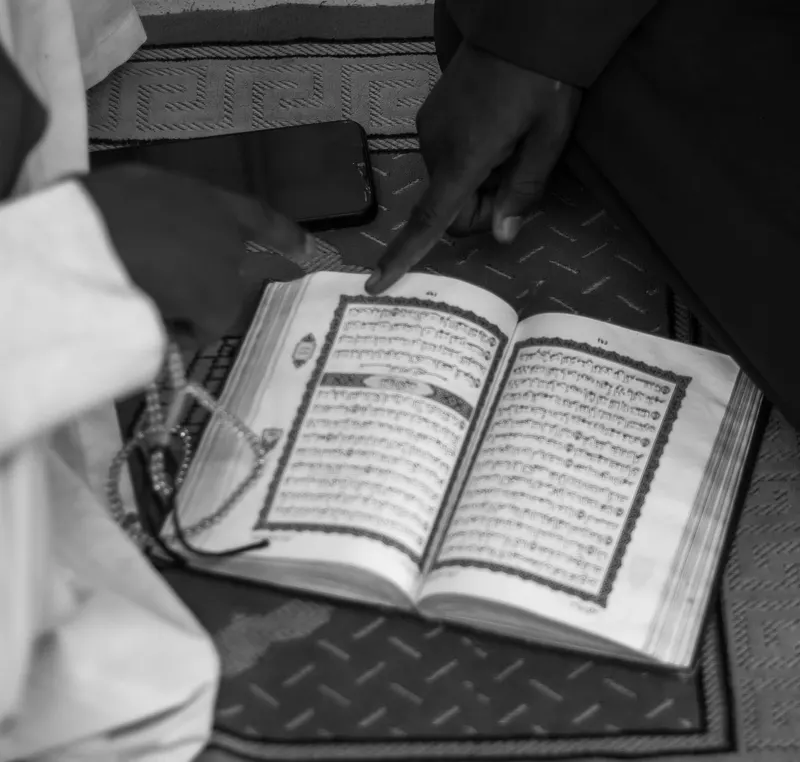
Ja'far ibn Muḥammad ibn Ali al-Sadiq was born in Medina around 700, and 702 is given in most sources, according to Gleave. Ja'far was the eldest son of Muhammad al-Baqir, the fifth Shīʿīte Imam, who was a descendant of ʿAlī ibn Abī Ṭālib, Muhammad's cousin and son-in-law, and Fatima, Muhammad's daughter. Ja'far's mother, Umm Farwa, was a great-granddaughter of the first Rashidun caliph, Abu Bakr. During the first fourteen years of his life, Ja'far lived alongside his grandfather, Ali ibn Husayn Zayn al-Abidin, the fourth Shīʿīte Imam, and witnessed the latter's withdrawal from politics and his limited efforts amid the popular appeal of Muhammad ibn al-Hanafiyya. Ja'far also noted the respect that the famous scholars of Medina held toward Zayn al-Abidin. In his mother's house, Ja'far also interacted with his grandfather, Qasim ibn Muhammad ibn Abi Bakr, a famous traditionalist of his time. The Umayyad rule reached its peak in this period, and the childhood of al-Sadiq coincided with the growing interest of Medinans in religious sciences and the interpretations of the Quran. With the death of Zayn al-Abidin, Ja'far entered his early manhood and participated in his father's efforts as the representative of the Household of Muhammad (Ahl al-Bayt). Ja'far performed the hajj ritual with his father, al-Bāqir, and accompanied him when the latter was summoned to Damascus by the Umayyad caliph Hisham ibn Abd al-Malik for questioning.
Under the Umayyad rulers
Most Umayyad rulers are often described by Muslim historians as corrupt, irreligious, and treacherous. The widespread political and social dissatisfaction with the Umayyad Caliphate was spearheaded by Muhammad's extended family, who were seen by Muslims as God-inspired leaders in their religious struggle to establish justice over impiety. Al-Sadiq's imamate extended over the latter half of the Umayyad Caliphate, which was marked by many (often Shia) revolts and eventually witnessed the violent overthrow of the Umayyads by the Abbasids, the descendants of Muhammad's paternal uncle Abbas ibn Abd al-Muttalib. Al-Sadiq maintained his father's policy of quietism in this period and, in particular, was not involved in the uprising of his uncle, Zayd ibn Ali, who enjoyed the support of the Mu'tazilites and the traditionalists of Medina and Kufa. Al-Sadiq also played no role in the Abbasid overthrow of the Umayyads. His response to a request for help from Abu Muslim, the Khorasani rebel leader, was to burn his letter, saying, "This man is not one of my men, this time is not mine." At the same time, al-Sadiq did not advance his claims to the caliphate, even though he saw himself as the divinely designated leader of the Islamic community (umma). This spiritual, rather than political, imamate of al-Sadiq was accompanied by his teaching of the taqiya doctrine (religious dissimulation) to protect the Shia against prosecution by Sunni rulers. In this period, al-Sadiq taught quietly in Medina and developed his considerable reputation as a scholar, according to Momen.
Under the Abbasid rulers
The years of transition from the Umayyads to the Abbasids was a period of weak central authority, allowing al-Sadiq to teach freely. Some four thousand scholars are thus reported to have studied under al-Sadiq. Among these were Abu Ḥanifa and Malik ibn Anas, founders of the Hanafi and Maliki schools of law in Sunni Islam. Wasil ibn Ata, founder of the Mu'tazila school of thought, was also among his pupils. After their overthrow of the Umayyad Caliphate, the Abbasids violently prosecuted their former Shia allies against the Umayyads. Because they had relied on the public sympathy for the Ahl al-Bayt to attain power, the Abbasids considered al-Sadiq a potential threat to their rule. As the leader of the politically quiet branch of the Shia, he was summoned by al-Mansur to Baghdad but was reportedly able to convince the caliph to let him stay in Medina by quoting the hadith, "The man who goes away to make a living will achieve his purpose, but he who sticks to his family will prolong his life." Al-Sadiq remained passive in 762 to the failed uprising of his nephew, Muhammad al-Nafs al-Zakiyya. Nevertheless, he was arrested and interrogated by al-Mansur and held in Samarra, near Baghdad, before being allowed to return to Medina. His house was burned by order of al-Mansur, though he was unharmed, and there are reports of multiple arrests and attempts on his life by the caliph.
Imamate
Ja'far al-Sadiq was about thirty-seven when his father, al-Bāqir, died after designating him as the next Shīʿīte Imam. He held the Imamate for at least twenty-eight years. His Imamate coincided with a crucial period in the history of Islam, as he witnessed both the overthrow of the Umayyad Caliphate by the Abbasids in the mid-8th century (661–750) and later the Abbasids' prosecution of their former Shia allies against the Umayyads. The leadership of the early Shia community was also disputed among its different factions. In this period, the various Alid uprisings against the Umayyads and later the Abbasids gained considerable support among the Shia. Among the leaders of these movements were Zayd ibn Ali (al-Sadiq's uncle), Yahya bin Zayd (al-Sadiq's cousin), Muhammad al-Nafs al-Zakiyya and his brother (al-Sadiq's nephews). These claimants saw the imamate and caliphate as inseparable for establishing the rule of justice, according to Jafri. In particular, Zayd ibn Ali argued that the imamate could belong to any descendant of Hasan ibn Ali or Husayn ibn Ali who is learned, pious, and revolts against the tyrants of his time. In contrast, similar to his father and his grandfather, al-Sadiq adopted a quiescent attitude and kept aloof from politics. He viewed the imamate and caliphate as separate institutions until such time that God would make the Imam victorious. This Imam, who must be a descendant of Muhammad through Ali and Fatima, derives his exclusive authority not from political claims but from nass (divinely inspired designation by the previous Imam) and he also inherits the special knowledge (ilm) which qualifies him for the position. Al-Sadiq did not originate this theory of imamate, which was already adopted by his predecessors, Zayn al-Abidin and al-Baqir. Rather, al-Sadiq leveraged the sudden climate of political instability to freely propagate and elaborate the Shia teachings, including the theory of imamate.
References
Text adapted from Ja'far al-Sadiq on Wikipedia (revision 1383551960), licensed CC BY-SA 4.0.