Idris
A prophet mentioned for truthfulness and elevated rank.
From the Deenlume library, adapted from Wikipedia
Awaiting review by a scholar. Please read with care and check the sources.
Idris (Arabic: إدريس, romanized: ʾIdrīs) is an ancient prophet mentioned in the Quran, who Muslims believe was the second prophet after Adam. He is the third prophet mentioned in the Quran. Islamic tradition has unanimously identified Idris with the biblical Enoch. Many Muslim scholars of the classical and medieval periods held that Idris and Hermes Trismegistus were the same person. He is described in the Quran as "trustworthy" and "patient" and the Quran also says that he was "exalted to a high station". Because of this and other parallels, traditionally Idris has been identified with the biblical Enoch, and Islamic tradition usually places Idris in the early Generations of Adam, and considers him one of the oldest prophets mentioned in the Quran, placing him between Adam and Noah. Idris' unique status inspired many future traditions and stories surrounding him in Islamic folklore. According to a hadith narrated by Malik ibn Anas and found in Sahih Muslim, it is said that on Muhammad's Night Journey, he encountered Idris in the fourth of the seven heavens. The traditions that have developed around the figure of Idris have given him the scope of a prophet as well as a philosopher and mystic, and many later Muslim mystics, or Sufis, including Ruzbihan Baqli and Ibn 'Arabi, also mentioned having encountered Idris in their spiritual visions.
Name
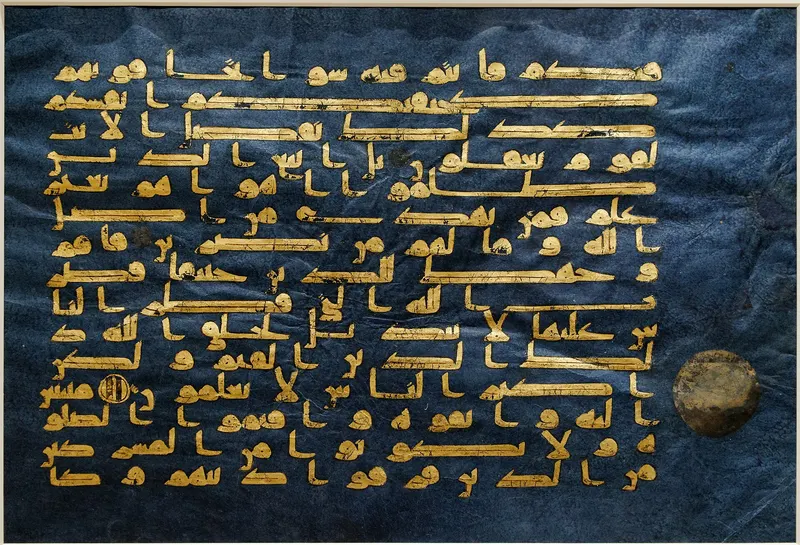
The name Idris (إدريس) has been described as perhaps having the origin of meaning "interpreter," a claim consistent with the three-letter root of the name, darasa (Arabic: ﺩَﺭَﺱَ, lit. 'to study') Traditionally, Islam holds the prophet as having functioned an interpretive and mystical role and therefore this meaning garnered a general acceptance. Later Muslim sources, those of the eighth century, began to hold that Idris had two names, "Idris" and "Enoch", and other sources even stated that "Idris' true name is Enoch and that he is called Idris in Arabic because of his devotion to the study of the sacred books of his ancestors Adam and Seth". Therefore, these later sources also highlighted Idris as either meaning "interpreter" or having some meaning close to that of an interpretive role. Several of the classical commentators on the Quran, such as Al-Baydawi said he was "called Idris from the Arabic dars, meaning "to study", from his knowledge of divine mysteries".
Quran
Idris is mentioned twice in the Quran. In both instances, he is described as a wise man. In surah 19 of the Quran, Maryam, God says:
Also mention in the Book the case of Idris: He was a man of truth (and sincerity), (and) a prophet:And We raised him to an exalted place. Later, in surah 21, al-Anbiya, Idris is again praised:
And (remember) Isma'il, Idris, and Dhu al-Kifl, all (men) of constancy and patience;We admitted them to Our mercy: for they were of the righteous ones.
Enoch
Idris is generally accepted to be the same as Enoch, the patriarch who lived in the Generations of Adam. Many Quranic commentators, such as al-Tabari and Qadi Baydawi, identified Idris with Enoch. Baizawi said, "Idris was of the posterity of Seth and a forefather of Noah, and his name was Enoch (Ar. Akhnukh)". Bursalı İsmail Hakkı's commentary on Fuṣūṣ al-Ḥikam by Ibn Arabi. Modern scholars, however, do not concur with this identification because they argue that it lacks definitive proof. As translator Abdullah Yusuf Ali says in note 2508 of his translation of the Quran:
Idris is mentioned twice in the Quran, viz., here and in Chapter 21, verse 85, where he is mentioned as among those who patiently persevered. His identification with the Biblical Enoch, may or may not be correct. Nor are we justified in interpreting verse 57 here as meaning the same thing as in Genesis, v. 24 ("God took him"), that he was taken up without passing through the portals of death. All we are told is he was a man of truth and sincerity, and a prophet, and that he had a high position among his people. With this identification, Idris's father becomes Yarid (يريد), his mother Barkanah, and his wife Aadanah. Idris's son Methuselah would eventually be the grandfather of Nuh (Noah). Hence Idris is identified as the great-grandfather of Noah.
Hermes Trismegistus
Antoine Faivre, in The Eternal Hermes (1995), has pointed out that Hermes Trismegistus (a syncretic combination of the Greek god Hermes and the Egyptian god Thoth) has a place in the Islamic tradition, although the name Hermes does not appear in the Quran. Hagiographers and chroniclers of the first centuries of the Islamic Hijrah quickly identified Hermes Trismegistus with Idris, the Prophet mentioned by the Quran in 19:56–57 and 21:85, whom the Arabs also identified with Enoch (cf. Genesis 5.18–24). Idris/Hermes was termed "Thrice-Wise" Hermes Trismegistus because he had a threefold origin. The first Hermes, comparable to Thoth, was a "civilizing hero", an initiator into the mysteries of the divine science and wisdom that animate the world; he carved the principles of this sacred science in Egyptian hieroglyphs. The second Hermes, in Babylon, was the initiator of Pythagoras. The third Hermes was the first teacher of alchemy. "A faceless prophet", writes the Islamicist Pierre Lory, "Hermes possesses no concrete or salient characteristics, differing in this regard from most of the major figures of the Bible and the Quran". A common interpretation of the representation of "Trismegistus" as "thrice great" recalls the three characterizations of Idris: as a messenger of god, or a prophet; as a source of wisdom, or hikmet (wisdom from hokhmah); and as a king of the world order, or a "sultanate". These are referred to as müselles bin ni'me. The star-worshipping sect known as the Sabians of Harran also believed that their doctrine descended from Hermes Trismegistus.
Other identifications
Due to the linguistic dissimilarities of the name "Idris" with the aforementioned figures, several historians have proposed that this Quranic figure is derived from "Andreas", the immortality-achieving cook from the Syriac Alexander romance. In addition, historian Patricia Crone proposes that both "Idris" and "Andreas" are derived from the Akkadian epic of Atra-Hasis.
References
Text adapted from Idris (prophet) on Wikipedia (revision 1386310799), licensed CC BY-SA 4.0.