Ibn Taymiyyah
Theologian and jurist with influential and debated works.
From the Deenlume library, adapted from Wikipedia
Awaiting review by a scholar. Please read with care and check the sources.
Ibn Taymiyya (Arabic: ٱبْن تَيْمِيَّة; 22 January 1263 – 26 September 1328) was a Sunni Muslim scholar, jurist, Mujtahid, traditionist, Qadiri Sufi, proto-Salafist theologian and iconoclast. Born in Harran in 1263 CE and fleeing from the Mongol invasion, he was taught by his grandfather and father in the principles of Islamic Jurisprudence at Damascus. Ibn Taymiyya proved to be a controversial figure among both his contemporaries and in later centuries. Syrian Salafi theologian Muhammad Rashid Rida, one of the major modern proponents of Ibn Taymiyya's works, designated him as the Mujaddid of the 7th Islamic century. Clerics and state authorities accused Ibn Taymiyya and his disciples of anthropomorphism, which eventually led to the censoring of his works and subsequent incarceration. Nevertheless, Ibn Taymiyyah has become influential among Sunni scholarly circles in recent times, and his creedal treatises are widely regarded by adherents of the contemporary Salafi movement as important classical scholarly references. Throughout his treatises, Ibn Taymiyya asserted there is no contradiction between reason and revelation, and denounced the usage of philosophy as a pre-requisite in seeking religious truth. He is also notable for his vigorous polemics against various schools of Kalam, particularly Ash'arism. As a cleric who viewed Shiism as a source of corruption in Muslim societies, Ibn Taymiyya was also known for his anti-Shia polemics throughout treatises such as Minhaj al-Sunna, wherein he denounced the Imami Shia creed as heretical. He issued a ruling to wage jihad against the Shias of Kisrawan and personally fought in the Kisrawan campaigns himself, accusing Shias of acting as the fifth-columnists of the Frank Crusaders and Mongol Ilkhanids. He is also known for his diplomatic involvement with the Ilkhanid ruler Ghazan Khan at the Battle of Marj al-Saffar, which ended the Mongol invasions of the Levant. A legal jurist of the Hanbali school, Ibn Taymiyya's condemnation of numerous Sufi practices associated with saint veneration and visitation of tombs made him a controversial figure with many rulers and scholars of the time, which caused him to be imprisoned several times as a result. Within recent history, Ibn Taymiyya has been widely regarded as a major scholarly influence in militant Islamist movements, such as Salafi jihadism. Major aspects of his teachings, had a profound influence on Muhammad ibn Abd al-Wahhab, the founder of the Wahhabism reform movement formed in the Arabian Peninsula, as well as other later Sunni scholars. Ibn Taymiyya's doctrinal positions, such as his takfir of the Mongol Ilkhanids and allowing jihad against other Muslims, were referenced by later Islamist political movements, including the Muslim Brotherhood, Hizb ut-Tahrir, al-Qaeda, and Islamic State, to justify social uprisings against the contemporary governments of the Muslim world. Although Ibn Taymiyya is frequently cited by followers of the Wahhabi movement in anti-Sufi polemics, portrayals of him as anti-Sufi are widely considered inaccurate, arising from selective and out-of-context interpretations of some of his writings. While he sometimes criticized certain practices associated with Sufism, he acknowledged that Sufism is an integral part of Islam and praised many Sufi masters; he himself was affiliated with the Qadiriyya order.
Early years
Ibn Taymiyya was born on 10 Rabi' al-Awwal 661 AH (January 22, 1263 CE) in Harran, Mamluk Sultanate to a family of traditional Hanbali scholars. He had Arab and Kurdish lineages by way of his Arab father and Kurdish mother. His father, Shihab al-Din Abd al-Halim ibn Taymiyya, held the Hanbali chair in Harran and later at the Umayyad Mosque. At the time, Harran was a part of the Mamluk Sultanate, near what is today the border of Syria and Turkey, currently in the Şanlıurfa Province. At the beginning of the Islamic period, Harran was located in Diyar Mudar, the land of the Mudar tribe. Before its destruction by the Mongols, Harran was also well-known since the early days of Islam for its tradition of adhering to the Hanbali school, to which Ibn Taymiyya's family belonged. His grandfather, Majd al-Din ibn Taymiyya, and his uncle, Fakhr al-Din, were both reputable scholars of the Hanbali school, and their scholarly achievements well-known.
Education
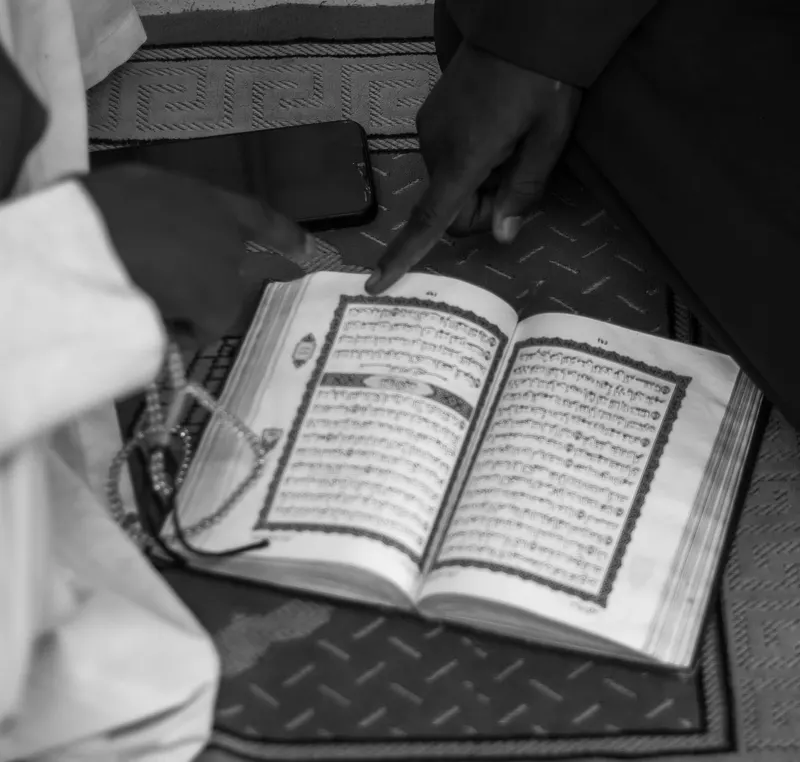
In 1269, Ibn Taymiyya, aged seven, left Harran together with his father and three brothers; however, the city was completely destroyed by the ensuing Mongol invasion. Ibn Taymiyya's family moved and settled in Damascus, Syria, which was ruled by the Mamluk Sultanate at the time. In Damascus, his father served as the director of the Sukkariyya Madrasa, a place where Ibn Taymiyya also received his early education. He acquainted himself with the religious and secular sciences of his time. His religious studies began in his early teens when he committed the entire Quran to memory, and later came to learn the disciplines of the Quran. From his father, he learnt the religious science of jurisprudence and its principles. Ibn Taymiyya studied the works of Ahmad ibn Hanbal, Abu Bakr al-Khallal, and Ibn Qudama, as well as the works of his own grandfather, Majd al-Din. His study of jurisprudence was not limited to the Hanbali tradition, as he also studied the other schools of jurisprudence. The number of scholars under which he studied hadith is said to number more than two-hundred, four of whom were women. Those who are known by name amount to forty hadith teachers, as recorded by Ibn Taymiyya in his work titled Arba'un Haditha. Serajul Haque says, based on this, Ibn Taymiyya started to hear hadith from the age of five. One of Ibn Taymiyya's teachers was the first Hanbali Chief Justice of Syria, Shams al-Din al-Maqdisi, who held the newly created position instituted by Baibars as part of a reform of the judiciary. Al-Maqdisi later came to give Ibn Taymiyya permission to issue legal verdicts, making him a judge at the age of seventeen. Ibn Taymiyya's secular studies led him to devote attention to the Arabic language and literature by studying Arabic grammar and lexicography under Ali ibn Abd al-Qawi al-Tufi. He went on to master the famous book of Arabic grammar al-Kitab, written by the grammarian Sibawayhi. He also studied mathematics, algebra, calligraphy, speculative theology, philosophy, history, and heresiography. With the knowledge he gained from history and philosophy, he set to refute the prevalent philosophical discourses of his time, one of which was Aristotelianism. Ibn Taymiyya also learnt about Sufism and stated he had reflected on the works of Sahl al-Tustari, al-Junayd al-Baghdadi, Abu Talib al-Makki, Abd al-Qadir al-Jilani, Shihab al-Din Umar al-Suhrawardi, and Ibn Arabi. In 1282, Ibn Taymiyya completed his education at the age of 20.
Life as a scholar
After his father died in 1284, he took up the then vacant post as the head of the Sukkariyya madrasa and began giving lessons on Hadith. A year later he started giving lessons, as chair of the Hanbali Zawiya on Fridays at the Umayyad Mosque, on the subject of tafsir (exegesis of Qur'an). In November 1292, Ibn Taymiyya performed the Hajj and after returning 4 months later, he wrote his first book aged twenty nine called Manasik al-Hajj (Rites of the Pilgrimage), in which he criticized and condemned the religious innovations he saw take place there. Ibn Taymiyya represented the Hanbali school of thought during this time. The Hanbali school was seen as the most traditional school out of the four legal systems (Hanafi, Maliki and Shafi'i) because it was "suspicious of the Hellenist disciplines of philosophy and speculative theology." He remained faithful throughout his life to this school, whose doctrines he had mastered, but he nevertheless called for ijtihad (independent reasoning by one who is qualified) and discouraged taqlid. Ibn Taymiyya had a simple life, most of which he dedicated to learning, writing, and teaching. He never married nor did he have a female companion throughout his years. Professor Al-Matroudi stated that this may be why he was able to engage fully with the political affairs of his time without holding any official position such as that of a qadi. An offer of an official position was made to him but he never accepted.
References
Text adapted from Ibn Taymiyya on Wikipedia (revision 1385035613), licensed CC BY-SA 4.0.