Umar ibn al-Khattab
From Wikipedia: Umar
From the Deenlume library, adapted from Wikipedia
Awaiting review by a scholar. Please read with care and check the sources.
Umar ibn al-Khattab (Arabic: عُمَر بْن ٱلْخَطَّاب, romanized: ʿUmar ibn al-Khaṭṭāb; c. 584 CE – 6 November 644 CE) was the second Rashidun caliph, ruling from August 634 until his assassination in 644. He succeeded Abu Bakr (r. 632–634) and is regarded as a senior companion and father of the wife of Islamic prophet Muhammad.
Umar was initially opposed to Muhammad, a distant Qurayshite kinsman, even setting out to kill him with his sword. However, after a spiritual break, he converted to Islam in 616, becoming the first Muslim to dare to pray openly in the Kaaba, an act followed by other Muslims. He participated in nearly all of Muhammad's battles and expeditions, and Muhammad conferred upon him the title al-Fārūq ("the Distinguisher") for his sound judgement. After Muhammad's death in June 632, Umar pledged allegiance to Abu Bakr as the first caliph and served as his chief adviser. Shortly before his death in 634, Abu Bakr nominated Umar as his successor. During Umar's reign, the caliphate expanded at an unprecedented rate. His campaigns against the Sasanian Empire resulted in the rapid conquest of Persia within two years (642-644), and more than two-thirds of the Byzantine Empire. Umar was assassinated by the Persian slave Abu Lu'lu'a Firuz in 644.
Umar is widely credited with expanding the Islamic world beyond Arabia and introducing the Hijri Calendar. Historians generally regard him as one of the most powerful and influential Muslim caliphs in history. Umar lifted the Christian ban on Jews entering Jerusalem and permitted them to worship there. In Sunni Islam, Umar is revered as a just ruler and a supreme model for Islamic virtues. In Shia Islam, however, he is viewed negatively.
Early life
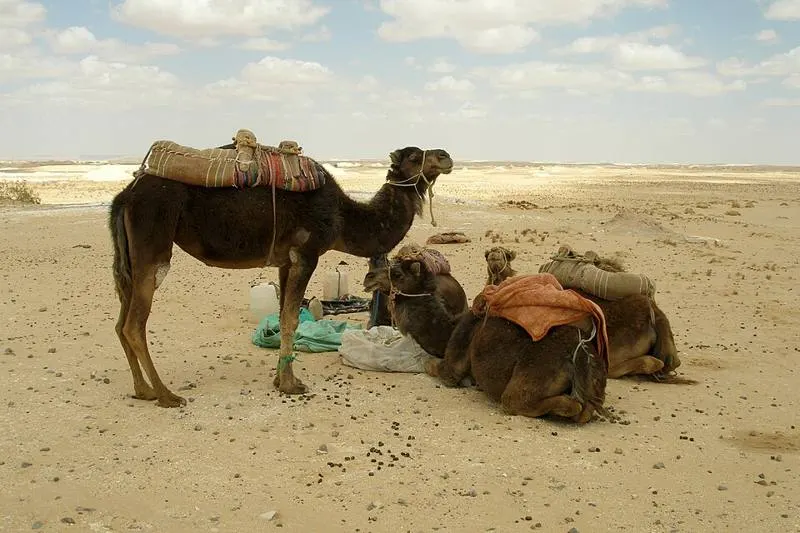
Umar was born in Mecca as a member of the Banu Adi, a minor clan of the Quraysh. His father was Khattab ibn Nufayl and his mother was Hantamah bint Hisham of the Banu Makhzum tribe. He eventually became the leader of the Banu Adi after his father. In his youth, Umar herded camels for his father in the plains near Mecca, later recalling that al-Khattab was a harsh and coarse man who subjected him to exhausting labor. Although literacy was rare in pre-Islamic Arabia, Umar was among the few members of the Quraysh who learned to read and write in his youth. He also developed a strong appreciation for poetry and literature. In accordance with the traditions of the Quraysh, he was trained in martial arts, horse riding, and wrestling during his adolescence. Tall, physically powerful, and possessing a fiery temper, he became a renowned champion wrestler.
Opposition and conversion to Islam
When Muhammad started preaching the message of Islam, Umar, like many others, initially opposed it and remained fanatically devoted to the old religion of Qurayshi polytheism. Firmly opposed to the new faith, he actively sought to kill Muhammad. When a small group of Muslims migrated to Abyssinia, Umar resolved to have Muhammad assassinated. However, while on his way to carry out the act, he was intercepted by Nu'aym ibn Abd Allah, a member of his own clan who concealed his Islamic faith. Learning of Umar's intention, Nu'aym dissuaded him by revealing that his own sister, Fatima bint al-Khattab, and brother-in-law, Sa'id ibn Zayd, had already secretly embraced Islam.
Umar then went directly to his sister's house, where a confrontation ensued. During the altercation, Umar threw his sister to the ground; but when he saw that she was bleeding, he felt ashamed, picked up the manuscript, and began to read Surah Ta-Ha, declaring the oneness of God. Moved by the passage, he accepted Islam. Following his conversion, Umar boldly declared the shahada publicly and began to preach to his relatives. His conversion marked a significant shift in the status of the nascent Muslim community, as he began to pray openly at the Kaaba, a move that directly challenged the Quraysh's attempts to suppress public Muslim worship in Mecca.
#### Migration to Medina and early campaigns
In 622 CE, following persecution from the Quraysh, Muhammad encouraged his followers to relocate to the city of Yathrib (later known as Medina). Unlike those who departed under the cover of night, Umar traveled openly alongside his family and kin. Among those who accompanied him were his cousin Sa'id ibn Zayd, his son-in-law Khunays ibn Hudhafa, and several allies from the Banu Adi and their affiliated clans. Upon their arrival in the outskirts of Medina, they resided with Rifa'a ibn Abd al-Mundhir among the Banu Amr ibn Awf in Quba. In 624 CE, Umar participated in the Battle of Badr, the first major military engagement between the Muslims and the Quraysh, during which he killed Al-As ibn Hisham ibn al-Mughira of the Banu Makhzum.
The following year, he participated in the Battle of Uhud. During the engagement, when Khalid ibn al-Walid's cavalry exploited a breach in the Muslim lines, Umar joined those who rallied around Muhammad as the forces attempted to reorganize. As the battle concluded and Abu Sufyan shouted challenges from the mountain, Muhammad instructed Umar to answer him, affirming that the Muslim dead were in paradise while their opponents were in hell. When Abu Sufyan inquired whether Muhammad had been killed, Umar assured him that he was alive and listening, prompting Abu Sufyan to abandon any attempt to press his advantage before returning to Mecca.
#### Subsequent campaigns and events
In 627 CE, Umar participated in the Battle of the Trench and the subsequent Siege of Banu Qurayza. In 628 CE, he participated in the events surrounding the Treaty of al-Hudaybiya and was present for the pledge of allegiance taken under the tree (Bay'at al-Ridwan), followed later that year by his participation in the Conquest of Mecca.
In 629 CE, following the dispatch of Amr ibn al-As on the expedition of Dhat al-Salasil, Muhammad sent reinforcements under Abu Ubayda ibn al-Jarrah, which included Abu Bakr and Umar, to secure victory against the enemy forces. During the Battle of Hunayn in 630 CE, when a portion of the Muslim forces initially retreated under a sudden ambush, Umar was among those who remained firm and held their ground. In 632 CE, Umar accompanied Muhammad on the Farewell Pilgrimage, during which a suggestion he made regarding the Station of Abraham coincided with the revelation of verse 125 of Al-Baqarah.
#### Death of Muhammad
When Muhammad died on 8 June 632 CE, Umar initially disbelieved the news and refused to accept his death. He threatened to strike anyone who claimed Muhammad had passed away, declaring that Muhammad had merely gone to his Lord in the manner that Moses had left his people temporarily before returning.
Abu Bakr then arrived at the mosque and addressed the community, stating:
Whoever worshiped Muhammad, let them know that Muhammad has died, and whoever worshiped Allah, let them know that Allah is alive and never dies.
Abu Bakr then recited verse 144 of Surat al-Imran:
Muḥammad is no more than a messenger; other messengers have gone before him. If he were to die or to be killed, would you regress into disbelief? Those who do so will not harm Allah whatsoever. And Allah will reward those who are grateful.
Establishment of the caliphate
Umar's political capacity first manifested as the architect of the caliphate following the death of Muhammad. While the funeral of Muhammad was being arranged, the Ansar (his Medinan followers) organized a meeting on the outskirts of the city, effectively excluding the Muhajirun, including Umar. Upon learning of this gathering at Saqifa, Umar proceeded to the meeting, accompanied by two other Muhajirun, Abu Bakr and Abu Ubayda, to head off the Ansar's plans for political separation. Arriving at Saqifa, Umar was faced with a unified assembly of tribes from the Ansar who initially refused to accept the leadership of the Muhajirun; however, he remained undeterred in his conviction that the caliphate should remain under Muhajirun control. After strained negotiations lasting one or two days, Umar divided the Ansar into their old warring factions of Aws and Khazraj. Though the Khazraj were in disagreement, Umar resolved the division by placing his hand on that of Abu Bakr as a unity candidate for those gathered in the Saqifa. Others at Saqifa followed suit, with the exception of the Khazraj leader, Saʽd ibn ʽUbadah, who was ostracised as a result. The Khazraj tribe is said to have posed no significant threat as there were sufficient men of war from the Medinese tribes such as the Banu Aws to immediately organise them into a military bodyguard for Abu Bakr.
Wilferd Madelung summarises Umar's contribution:
Umar judged the outcome of the Saqifa assembly to be a Faltah (a "precipitate" or "ill-considered" deal) because of the absence of most of the prominent Muhajirun, including the Prophet's own family and clan, whose participation he considered vital for any legitimate consultation (shura). It was, he warned the community, to be no precedent for the future. Yet he also defended the outcome, asserting that the Muslims wished for Abu Bakr as for no one else. He apologised, moreover, that the Muhajirun present were forced to press for an immediate oath of allegiance since the Ansar could not have been trusted to wait for a legitimate consultation and might have proceeded to elect one of their own after the departure of the Meccans. Another reason for Umar to censure the Saqifa meeting as a Faltah was no doubt its turbulent and undignified end, as he and his followers jumped upon the sick Khazraji leader Saʽd ibn ʽUbadah in order to teach him a lesson, if not to kill him, for daring to challenge the sole right of Quraysh to rule. This violent break-up of the meeting indicates, moreover, that the Ansar cannot all have been swayed by the wisdom and eloquence of Abu Bakr's speech and have accepted him as the best choice for the succession, as suggested by Leone Caetani. There would have been no sense in beating up the Khazraji chief if everybody had come around to swearing allegiance to Umar's candidate. A substantial number of the Ansar, presumably of Khazraj in particular, must have refused to follow the lead of the Muhajirun.
Western scholars tend to agree that Ali believed he had a clear mandate to succeed Muhammad, but offer differing views as to the extent of use of force by Umar in an attempt to intimidate Ali and his supporters. For instance, Madelung discounts the possibility of the use of force and argues that:
Isolated reports of use of force against Ali and Banu Hashim who unanimously refused to swear allegiance for six months are probably to be discounted. Abu Bakr no doubt was wise enough to restrain Umar from any violence against them, well realizing that this would inevitably provoke the sense of solidarity of the majority of Abd al-Manaf whose acquiescence he needed. His policy was rather not isolating Banu Hashim as far as possible.
References
Text adapted from Umar on Wikipedia (revision 1386742033), licensed CC BY-SA 4.0.