Salman al-Farisi
From Wikipedia: Salman the Persian
From the Deenlume library, adapted from Wikipedia
Awaiting review by a scholar. Please read with care and check the sources.
'Salman Farsi (born Rozbih Khwashbudhan or Rozbih Budhakhshan; c. 568 CE– c. 652 or 653 CE) was a Persian religious scholar and one of the companions of Muhammad. As a practicing Zoroastrian, he dedicated much of his early life to studying to become a magus, after which he began travelling extensively throughout West Asia to engage in constructive dialogue with non-Zoroastrian groups. His quests eventually led to his conversion to Islam, which occurred after he met and befriended Islamic prophet Muhammad in the city of Medina. He was a prominent non-Arab companion and one of Muhammad's closest friends; Muhammad had once stated to a gathering of his followers that he regarded Salman as a part of his family. Muhammad is reported to have specifically said "Salman is part of my Ahl al-Bayt." In meetings with the other companions, he was often referred to by the kunya Abu ʿAbdullah.
Prior to the Battle of the Trench in 627, Salman suggested to Muhammad and the other early Muslims that a large trench be dug around Yathrib (citing a technique commonly used by the Sasanian army) in order to help defend against the Quraysh, who were marching from Mecca in order to besiege the city. After Muhammad's death in 632, Salman became closely associated with Muhammad's cousin and son-in-law Ali ibn Abi Talib and is claimed to have participated in the Muslim conquest of Persia, aiding the territorial expansion of the Rashidun Caliphate outside of the Arabian Peninsula.
Early life

The date and place of Salman's birth are disputed. Based on available evidence, he was likely born between 568 and 570 AD. Salman was a Persian originally named as either Rozbih Khwashbudhan, or Rozbih Budhakhshan. His birthplace is reported as either Kazerun in Fars province or Isfahan in Isfahan province. In a hadith, Salman also traced his ancestry to Ramhormoz. The first sixteen years of his life were dedicated to studying to become a Zoroastrian magus or priest, after which he became the guardian of a fire temple.
Career as a Sahabi
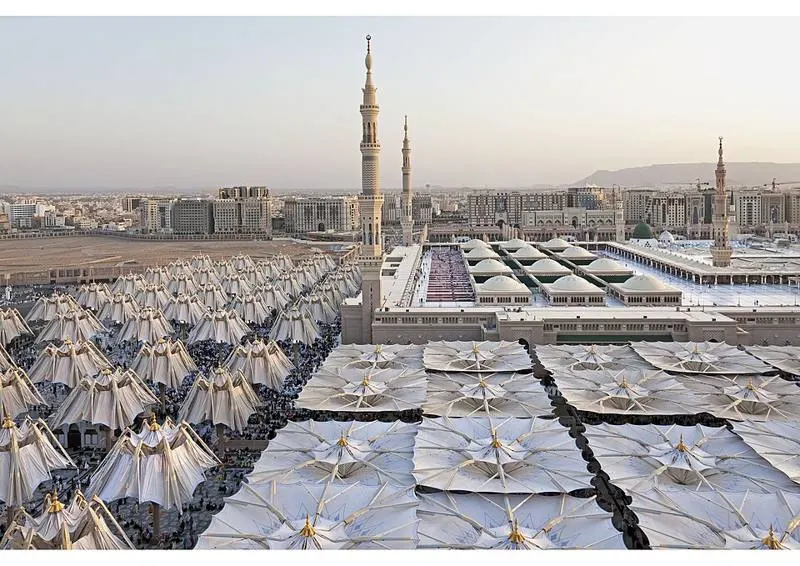
Salman came up with the idea of digging a great trench around the Medina, to defend the city against the army of 10,000 Arabian non-Muslims. Muhammad and his companions accepted Salman's plan because it was safer, and there would be a better chance that the non-Muslim army would have a larger number of casualties.
While some sources gather Salman with the Muhajirun, other sources narrate that during the Battle of the Trench, one of Muhajirun stated "Salman is one of us, Muhajirun", but this was challenged by the Muslims of Medina (also known as the Ansar). A lively argument began between the two groups with each of them claiming Salman belonged to their group and not to the other one. Muhammad arrived on the scene and heard the argument. He was amused by the claims but soon put an end to the argument by saying: "Salman is neither Muhajir nor Ansar. He is one of us. He is one of the People of the House."
Salman participated in the conquest of the Sasanian Empire, and became the first governor of the Sasanian capital Ctesiphon, after its fall at the time of the second Rashidun Caliph, Umar ibn Al-Khattab.
Translation of the Quran
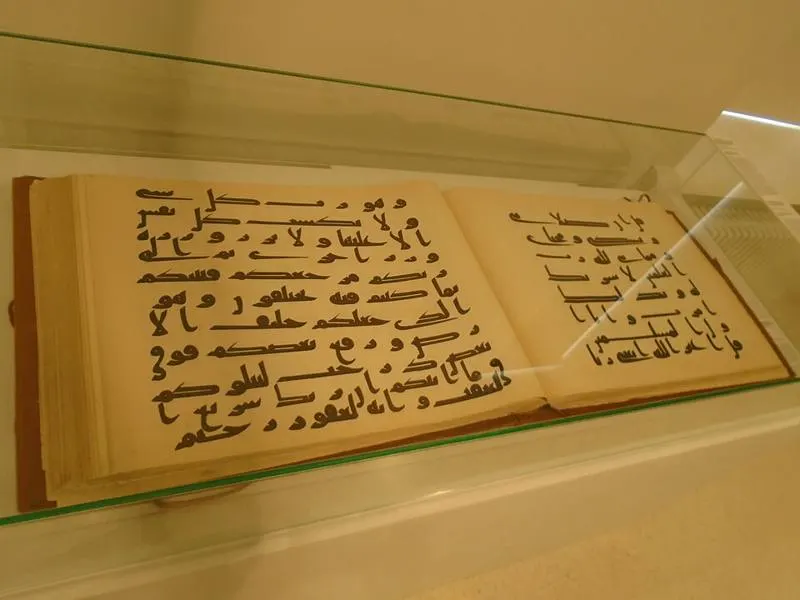
Salman translated the Quran into Persian, thus becoming the first person to interpret and translate the Quran into a foreign language. Salman is said to have written the following poem on his enshrouding cotton:
I am heading toward the Munificent, lacking a sound heart and an appropriate provision,
While taking a provision (with you) is the most dreadful deed, if you are going to the Munificent
Salman used to cut the hair of Muhammad at the time, inspiring plates in Turkish barber shops with the verse:
Every morning our shop opens with the basmala,
Hazrat-i Salman-i Pak is our pir and our master.
Manuscripts
Salman is considered one of the pioneers in Shia written works. In addition, written works have also been attributed to him. Including a work called "Khabar Jathliq ar-Rumi". Of course, this work is a text that Salman only narrated and was not the author of. "Khabar Jathliq ar-Rumi" contains the theological questions of the Roman emperor to the Caliph of the Muslims after the death of Muhammad and Ali's answer to those questions. Ibn Babawayh quoted three parts of it and at the end of the second and third quotations he pointed out that the full text of Salman's book is at the end of the book Muhammad had been brought.
Death
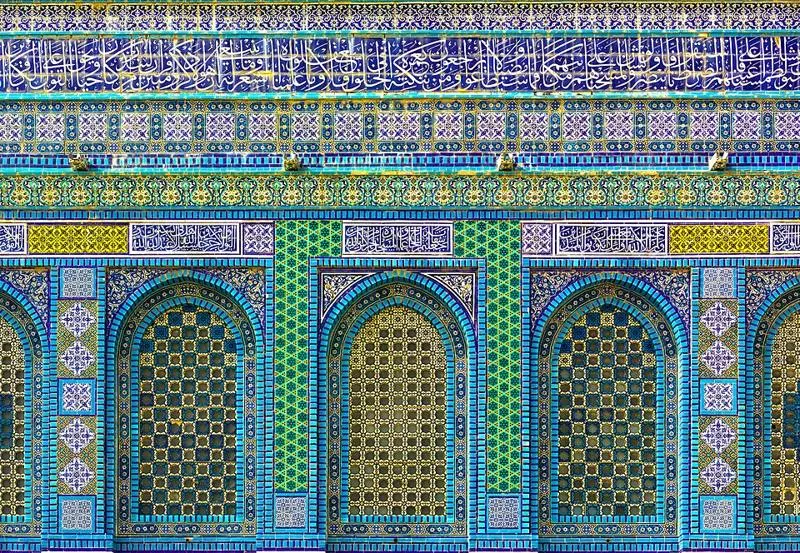
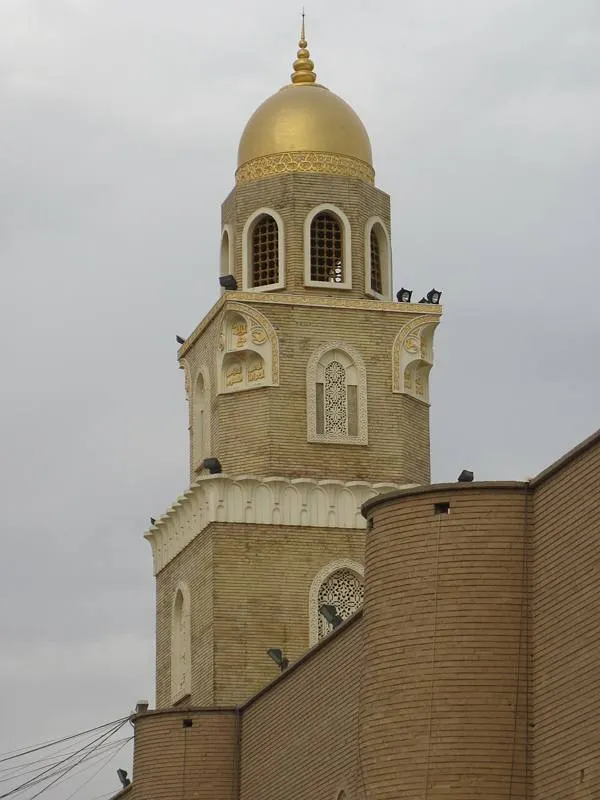
One source states that he died in the Hijrah year of 36, or 656. Other sources state that he died in the year 35 AH, or 655. His tomb is located in Salman Al-Farsi Mosque in Al-Mada'in, or according to some others, in Isfahan, Jerusalem or elsewhere.
Shia Islam
Shi'ites, Twelvers in particular, hold Salman in high esteem for a hadith attributed to him, in which all twelve Imāms were mentioned to him by name, from Muhammad. Salman, along with Abu Dharr al-Ghifari, Ammar ibn Yasir, and Miqdad ibn Aswad, is considered to be the four loftiest of the Shi'a. Ali Asgher Razwy, a 20th-century Shia Twelver Islamic scholar states:
If anyone wishes to see the real spirit of Islam, he will find it, not in the deeds of the nouveaux riches of Medina, but in the life, character and deeds of such companions of the Apostle of God as Ali ibn Abi Talib, Salman el-Farsi, Abu Dharr el-Ghiffari, Ammar ibn Yasir, Owais Qarni and Bilal. The orientalists will change their assessment of the spirit of Islam if they contemplate it in the austere, pure and sanctified lives of these latter companions.
Alawism
For Alawites, Salman is part of a divine trinity alongside Muhammad and Ali, the latter of whom is seen as a manifestation of Allah.
Sufism
Salman is also well known as a prominent figure in Sufism. Sufi orders such as Qadiri, Bektashi, and Naqshbandi have Salman in their isnad of their brotherhood. In the Uwaysi-Shahmaqsudi order of Kubrawi Sufism and in Naqshbandi Sufism, Salman is the third person in the chain connecting devotees with Muhammad. The members of futuwwa associations also regarded Salman as one of their founders, along with Ali.
Druzism
Druze tradition honors several "mentors" and "prophets", and Salman is honored as a prophet, and as an incarnation of the monotheistic idea.
References
Text adapted from Salman the Persian on Wikipedia (revision 1385975312), licensed CC BY-SA 4.0.