Abdullah ibn Mas'ud
From Wikipedia: Abd Allah ibn Mas'ud
From the Deenlume library, adapted from Wikipedia
Awaiting review by a scholar. Please read with care and check the sources.
Abd Allah ibn Mas'ud (Arabic: عبد الله بن مسعود, romanized: ʿAbd Allāh ibn Masʿūd; c. 594 – c. 653) was a companion of the Islamic prophet Muhammad whom Sunni Islamic tradition regards as the greatest interpreter of the Quran of his time and the second ever. He was also referred to as the kunya Abu Abd al-Rahman.
Early years
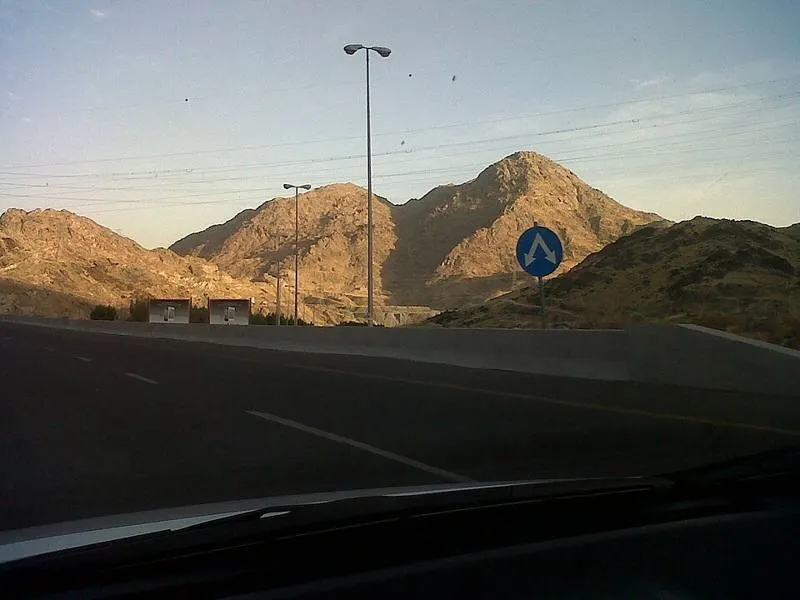
Abd Allah ibn Mas'ud was born in Mecca in about 594, a son of Mas'ud ibn Ghafil and Umm Abd bint Abd Wadd, both of whom were from the Hudhayl tribe,
Abd Allah had a brother, Utba, and at least one wife in Muhammad's lifetime. A craftswoman who supported Abd Allah and their child through her hand-crafts. She was Zaynab bint Abd Allah from the Thaqif tribe with whom he had several daughters. Some people called her also Rayta bint Abd Allah. Based on authentic hadiths, both Rayta and Zaynab was the same woman, referto Abd Allah's age and his age of marriage due to his difficult economy. He specified in his will that none of his daughters should be married off without their own knowledge. He also had a son named Abd al-Rahman.
He is described as a thin, short man with very dark skin, and smooth hair reaching his shoulders. Abd Allah wore white clothes, and could be recognized in the dark by his distinctive, high-quality perfume. He was reported to be sociable and willing to speak out to put people at ease. In his character and goals, he was said to be the person "most like Muhammad".
Conversion to Islam
Ibn Masʿūd was an early follower of Islam, having converted before 616. He appears nineteenth on Ibn Ishaq's list of people who were converted by Abu Bakr.
As a youth, he worked as a shepherd for Uqba ibn Abu Mu'ayt, one of the principal adversaries of Islam. He first met Muhammad and Abu Bakr while watching his flocks when they were "fleeing from the idolators". They asked him for milk, but Abd Allah said he could not steal from his employer. According to Masʿūd, Muhammad then asked for an unmated ewe and stroked its udder, whereupon milk poured out. Abd Allah immediately asked to be taught "some of these words", and Muhammad began to teach him the Qur'an. Abd Allah later said that he learned 70 surahs from Muhammad.
Later his mother and brother also converted to Islam.
Around 614 the Quraysh began a campaign to suppress Islam through the oppression of Muslims of lower social status. Abd Allah, as a foreigner whose allies had withdrawn their protection, was vulnerable to this persecution. Abu Jahl—one of the high-status leaders among the Quraysh—once "clawed at him and punched him".
The Muslims remarked one day that the Quraysh had never heard the Qur'an being recited clearly, and that someone needed to make them listen to it. Abd Allah volunteered. His friends reminded him that he had no protector and therefore the crowds might attack him, but Abd Allah replied, "Allah will protect me." He stood in front of the Kaaba and began to recite Surah Ar-Rahman from the Qur'an. When the Quraysh realised that he was reciting Muhammad's teaching, they began to hit his face, but he continued to recite. He returned to the Muslims with the bruises on his face, saying, "I have never despised Allah's enemies more than I do now, and if you like I will go and do the same thing tomorrow." The Muslims told him that he had already done enough, "for you have made them listen to what they don't want to hear".
Abd Allah and his brother Utba were among those who emigrated to Abyssinia in 616. Abd Allah returned to Mecca in 619 with Abd al-Rahman ibn Awf.
Emigration to Medina
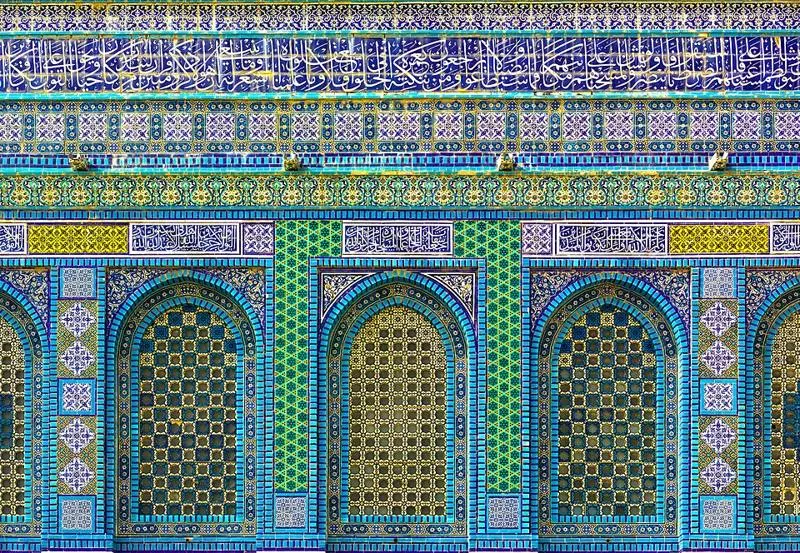
When the Muslims emigrated to Medina in 622, Abd Allah lodged with Muadh ibn Jabal or Saad ibn Khaythama. One tradition states that Muhammad made a pact of brotherhood between Abd Allah and Muadh ibn Jabal; but according to another, Abd Allah's brother in Islam was al-Zubayar ibn Al-Awwam. When land in Medina was allocated to the immigrants, the Zuhra clan was given an area behind the mosque, which included plots for Abd Allah and his brother Utba.
Relationship with Muhammad
Outsiders perceived Abd Allah and his mother as members of Muhammad's household. He worked as a personal servant, taking care of Muhammad's bedding, toothbrush, sandals and travelling hygiene. "He used to screen him when he bathed and wake him when he slept and walk with him in a wild land." He was said to be the "keeper of secrets". Muhammad once told him to climb a tree and bring him a twig. The companions laughed at how thin Abd Allah's legs were. Muhammad said: "Why are you laughing? Abd Allah's foot will be heavier than Mount Uhud in the scales on the Day of Resurrection."
Muhammad recognized Abd Allah as one of the four foremost experts on the Qur'an. He once asked him to recite; when Abd Allah protested, "Should I recite it to you when you are the one to whom it was sent down and revealed?" Muhammad replied, "I love to hear it from someone else." Abd Allah then recited it until Muhammad wept.
Military career
Abd Allah fought at the Battle of Badr. After the battle, Muhammad ordered the warriors to search among the corpses for his enemy Abu Jahl, who could be recognised by a distinctive scar on his knee.
Abd Allah found Abu Jahl Amr "at his last gasp" with his leg cut off. He seized his beard and asked, "Are you Abu Jahl?" Abu Jahl replied, "Can there be a man superior to the one you have killed or one whom his own folk has killed?" Abd Allah then placed his foot on Abu Jahl Amr's neck, and asked, "Allah's enemy, has Allah put you to shame?" Abu Jahl Amr replied, "How has he shamed me? Am I anything more than a man whom you have killed? Tell me how the battle went." Abd Allah told him that the Muslims had won. Abu Jahl Amr responded, "You have climbed high, you little shepherd!" Then Abd Allah struck off his head. He brought it to Muhammad, proclaiming, "This is the head of Allah's enemy Abu Jahl!".
Abd Allah also fought at the Battle of Uhud, the Battle of the Trench and "all the battles", including Tabuk. Twenty years later, he said he wished he had died at Tabuk.
Caliphates of Abu Bakr and Umar
After the death of Muhammad, Abd Allah ibn Mas'ud became the eighth-most prominent transmitter of hadith with a total of 848 narrations. Umar called him "a box full of knowledge". The following traditions are among those attributed to him.
I asked Allah's Messenger which deed was the best. He replied: "Prayer at its appointed hour." I said: "Then what?" He replied: "Kindness to the parents." I said: "Then what?" He replied: "Jihad in the cause of Allah." And I would not have ceased asking more questions but out of regard.
A man said: "Allah's Messenger, which offence is the most grievous in Allah's eye?" He replied: "That you associate a partner with Allah, who created you." He said: "What next?" He replied: "That you kill your child out of fear that he would join you in food." He said: "What next?" He replied: "That you commit adultery with your neighbour's wife." And the Almighty and Exalted Lord testified it: All those who call not unto another god along with Allah, and slay not any soul which Allah has forbidden, except in the cause of justice, nor commit fornication, and he who does this shall meet a requital of sin. [ Qur'an 25:68]
We were along with Allah's Messenger at Mina, that moon was split up into two. One of its parts was behind the mountain and the other one was on this side of the mountain. Allah's Messenger said to us: "Bear witness to this."
Umar allotted Abd Allah a pension of 6,000 dirhams, and he was said to be very generous with his money. His mother was also granted a pension of 1,000 dirhams.
Around 642 Umar appointed him as a preacher, treasurer and magistrate (qāḍī) in Kufa, saying: "I have preferred you with him over myself, so take him."
References
Text adapted from Abd Allah ibn Mas'ud on Wikipedia (revision 1384367545), licensed CC BY-SA 4.0.